LED retrofits that actually pay back in warehouses
Swapping metal halide high bays for LED is one of the few building upgrades that pays for itself on the energy bill alone. But the payback range we see in the field is wide, and the difference almost always comes down to specification rather than the fixtures themselves.
These are the decisions that move the number for warehouse, shop and distribution facilities across the Wasatch Front.
Design to the footcandles, not the fixture count
One-for-one replacement is the easy path and often the wrong one. LED distribution patterns differ from HID, so a photometric layout frequently lets you use fewer, better placed fixtures while improving light levels at the floor and in the aisles.
We target task-appropriate footcandles: general warehouse storage, pick aisles, packing stations and shop benches all want different numbers. Over-lighting the whole building to satisfy one work area is wasted capital and wasted energy.
Specify for the space, not the spec sheet
- Mounting height drives beam angle. Narrow racking needs a different optic than open floor.
- Color temperature around 4000K to 5000K reads well in industrial spaces without the harshness of higher values.
- High CRI matters where color-critical inspection or paint work happens.
- Cold storage, wash-down, and high-vibration areas need fixtures rated for those conditions, or you will be replacing them early.
- Check the driver warranty, not just the fixture warranty. Drivers are what fail.
Controls are where the second half of the savings live
Occupancy sensing in low-traffic aisles, daylight harvesting near skylights and dock doors, and simple scheduling routinely add another meaningful cut on top of the lamp savings. In a building that runs one shift, lights burning through empty hours is often the largest single line of waste.
Energy code in Utah requires controls in many commercial applications anyway, so designing them in from the start is cheaper than retrofitting them later.
Rebates and disposal
Rocky Mountain Power's business lighting incentives can cover a real share of project cost, but they are paperwork-driven and often require pre-approval before installation begins. Starting the application after the fixtures are hung is how facilities leave money on the table.
Existing HID and fluorescent lamps contain mercury and need proper disposal. We plan lamp removal and recycling into the scope so the job closes cleanly.
Keeping the building running during install
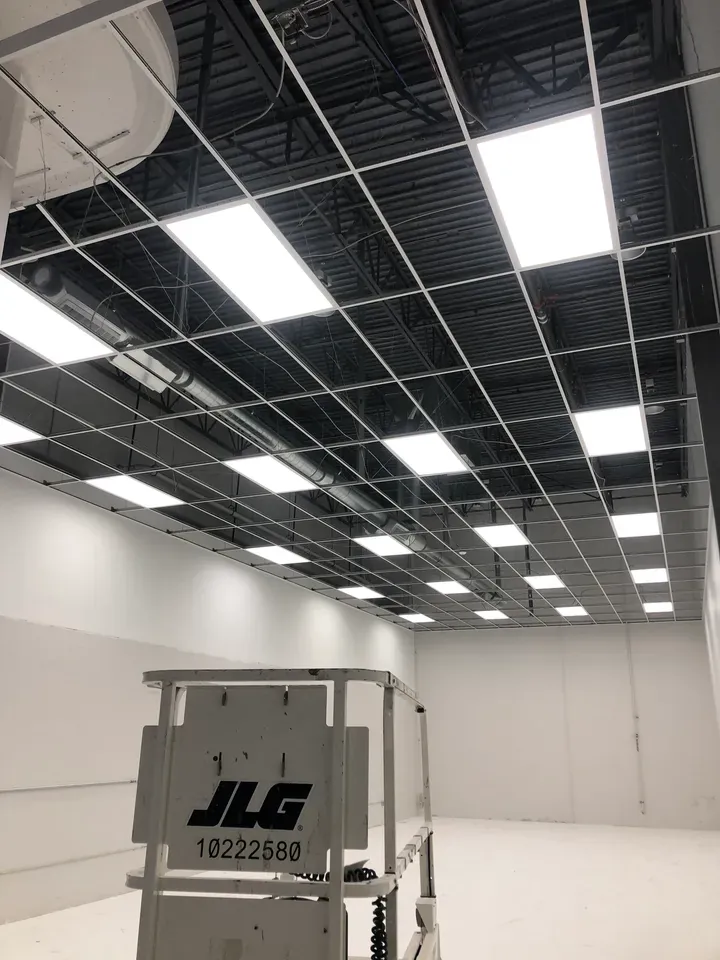
For active warehouses we phase the work by bay or by shift, use lifts sized to the aisle, and coordinate lockout with your facility team. Production does not stop because the lights are getting replaced.
Frequently asked questions
- What is a typical payback period on a warehouse LED retrofit?
- It depends on operating hours, current fixture wattage, and rebate capture. Facilities running long hours on older HID typically see the fastest return; we model your actual numbers before you commit.
- Can you retrofit without shutting the warehouse down?
- Yes. We phase installs by bay or work off-shift so operations continue.
- Do you handle the Rocky Mountain Power rebate paperwork?
- We help identify eligible measures and provide the fixture and installation documentation the incentive program requires. Applications should be started before installation.